Film Stock Prompts: Five Real Films and the Look Each Gives
By Daniel Riley · Published · Updated
In short: If your AI footage looks like it came off a phone, the prompt probably never said what it was shot on. Name a real film, say "35mm film", add a few words about how that film looks, and the model has something definite to copy. Five films below, each with an image and a video prompt, then a template that adds a lens and a light.

A still from the “5 Film Stocks” reel.
Each video example is a still made on the same film look, not a frame cut from a rendered clip. Captions name the model used.
Leave the camera out and the model falls back on whatever it has seen most, which is clean, sharp, evenly lit digital video. Typing “vintage” or “retro filter” rarely helps. You tend to get a brown wash, maybe some fake scratches, sitting on top of a picture that is still obviously digital.
A film name is different. People have been captioning photos “shot on Portra” for decades, so the word comes attached to a real colour, a real contrast and a real grain.
Each film line has three bits. The full film name. “35mm film”, which tells the model it’s a film photo at all. And a handful of look words, there as backup in case the model only half-knows the name.
Source post: The “5 Film Stocks” reel on Instagram (@trypromptwise) · “5 Film Stocks” on Facebook
Five stocks at a glance
| Stock | Type | The look | Best light |
|---|---|---|---|
| Kodak Gold 200 | Colour negative, ISO 200, daylight | Warm golden-yellow cast, saturated reds and yellows, fine grain | Hard midday sun or direct flash |
| Kodak Portra 400 | Colour negative, ISO 400, daylight | Warm natural skin, soft pastels, low contrast | Soft backlight, open shade, window light |
| Fujifilm Velvia 50 | Colour slide, ISO 50, daylight | Colours pushed hard, deep blues and greens, rich contrast | Clear low sun under a deep blue sky |
| Ilford HP5 Plus | Black-and-white negative, ISO 400 | Black and white only, deep blacks, gritty grain when pushed | One hard light, such as blinds or a street lamp |
| CineStill 800T | Colour negative, ISO 800, tungsten | Cool teal shadows, red glow around lights, visible grain | Neon, lamps and street lights at night |
Image prompts are written for Realism Pro and video prompts for text to video in Seedance 2.5. For the closest match between the two, generate the still first and use it as the video’s first frame.
Why a film name beats a “vintage” filter
Instead of: “A family having a barbecue in the backyard, vintage film look, retro filter, nostalgic, cinematic, 8k, ultra detailed.”
Better:
Photorealistic snapshot of a family barbecue in a 1990s backyard on a hot summer afternoon: a dad flips burgers at a red kettle grill while two kids run through a lawn sprinkler behind him. Hard bright sun and sparkling water drops. Shot on Kodak Gold 200, 35mm film: a warm golden-yellow cast, saturated reds and greens, soft creamy highlights and fine visible grain, like a print from a family photo album. Real unretouched skin, natural hands, no readable text or logos.Why this works
- The weak version asks for two opposite things. “Vintage” and “retro filter” want an old overlay, then “8k” and “ultra detailed” drag it straight back to crisp digital.
- The better version names one film, the film size and the look, and describes a real light, so there is a single kind of photo to copy.
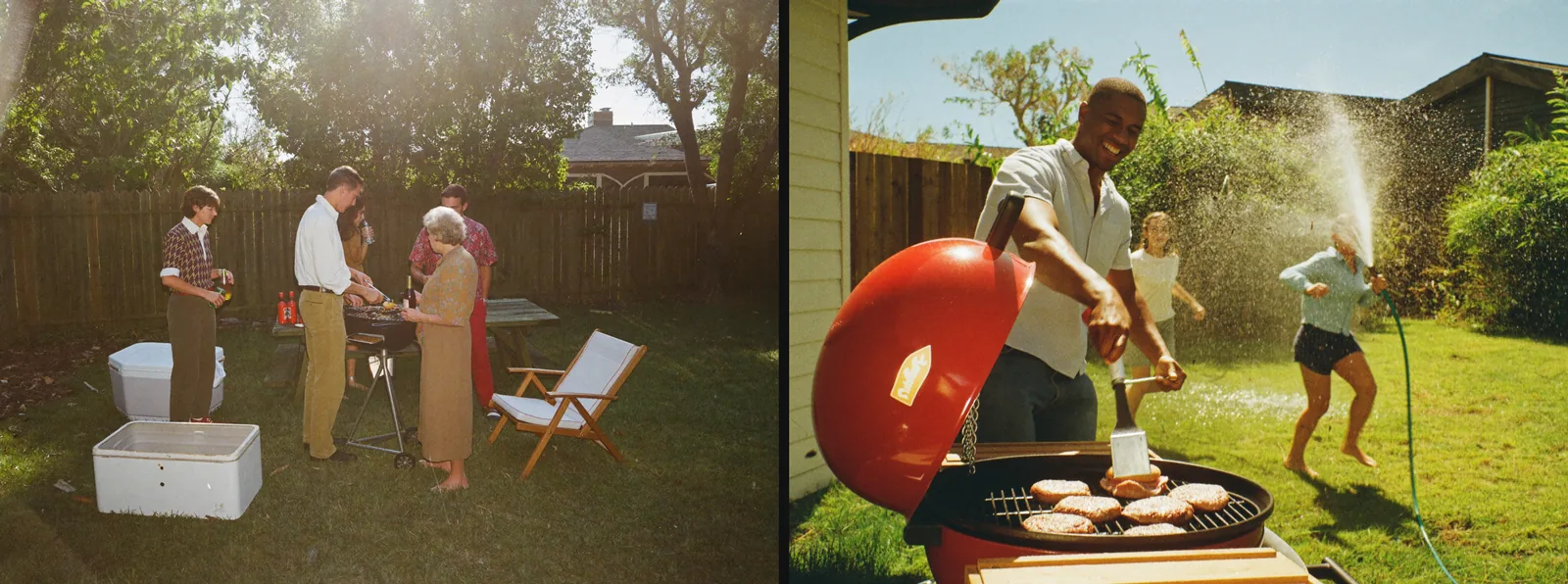
Made in Realism Pro: the “Instead of” line, then the BETTER prompt.
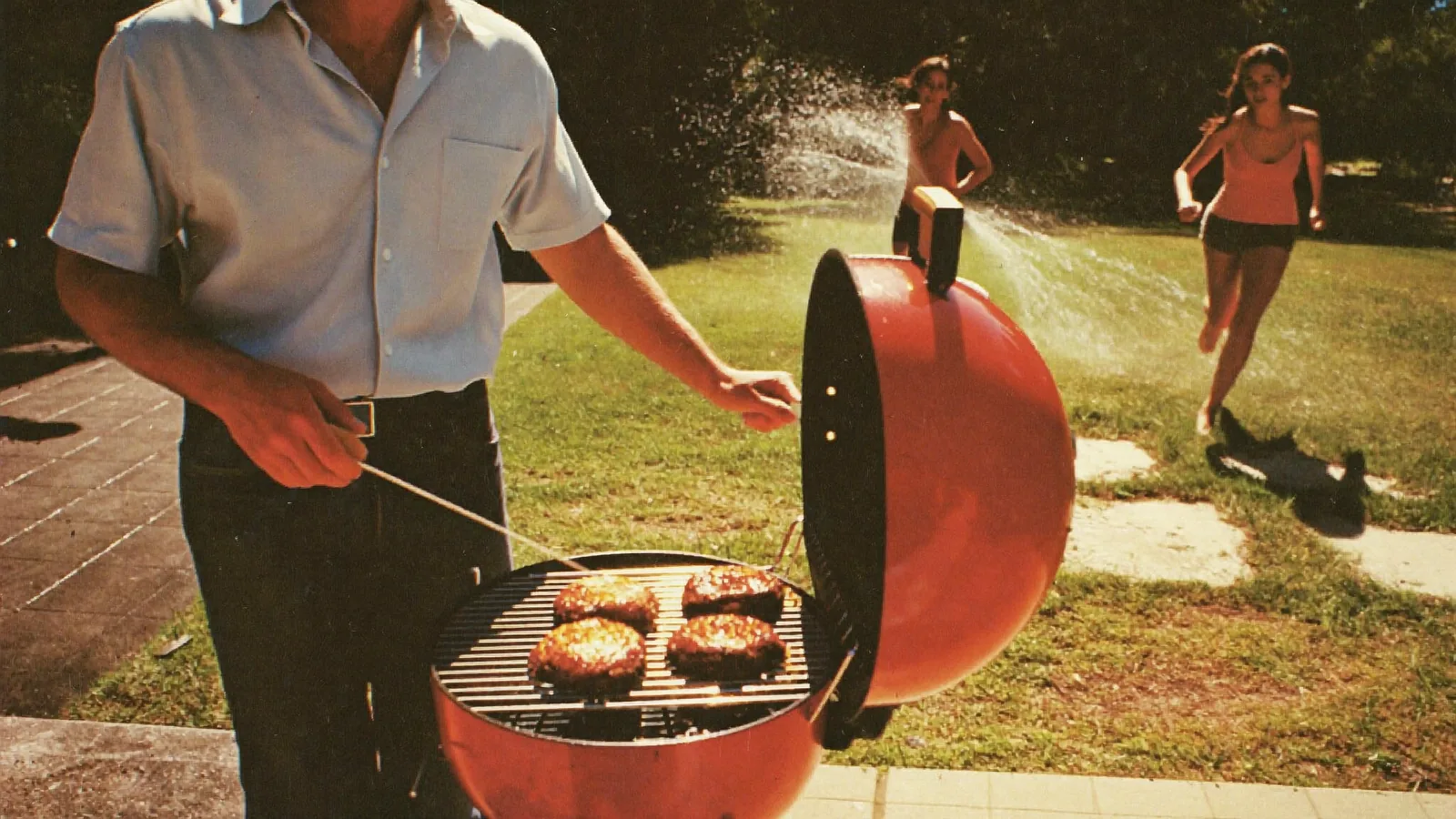
Made in Realism Pro: BETTER prompt above, as written.
Kodak Gold 200: warm, yellow, a nineties summer
Gold is the film people bought at the chemist for holidays. Everything goes a bit golden, and reds and yellows jump out. The film line gets you the colour of an old print, but it won’t date the picture on its own; props do that, so add one or two things from the decade, such as an inflatable pool, a camcorder or a station wagon. Keep it away from cold scenes like snow, blue night or a white studio. And watch the skin in strong sun, which can go orange.
Kodak Gold 200 Film Line:
Shot on Kodak Gold 200, 35mm film: a warm golden-yellow cast, saturated reds and yellows, soft creamy highlights and fine visible grain, like a 1990s family snapshot.Image Prompt
Photorealistic [snapshot or medium shot] of [your subject, e.g. a dad in a Hawaiian shirt] [what they are doing] in [a sunny place, e.g. a backyard or a beach] on a hot summer afternoon in the 1990s, with [one or two details from the decade]. Hard bright sun from [the left or right], sparkling light and warm shadows. Shot on Kodak Gold 200, 35mm film: a warm golden-yellow cast, saturated reds and yellows, soft creamy highlights and fine visible grain, like a 1990s family snapshot. Real unretouched skin, natural hands, no readable text or logos.Video Prompt
SET: [a sunny place, e.g. a 1990s backyard with a lawn sprinkler] on a hot summer afternoon, with [one or two details from the decade]. No readable text or logos.
LIGHT: hard bright midday sun, sparkling light and warm shadows.
FILM: the look of Kodak Gold 200 35mm film, 24 frames per second: a warm golden-yellow cast, saturated reds and yellows, soft creamy highlights and fine visible grain, like a 1990s family snapshot.
SHOT: one continuous 5-second MEDIUM-WIDE SHOT, 35mm lens, [one camera move, e.g. a slow sideways track]: [your subject] [one action, e.g. runs through the sprinkler, laughing].
SOUND: [the sounds, e.g. the sprinkler ticking and birdsong]. No music.
LOOK: real Kodak Gold 200 35mm film texture throughout. Natural movement, real unretouched skin, hands with five fingers. No text, subtitles, logos or readable signs anywhere. No slow motion.
Why this works
- Gold was sold for sunny days. Give it midday sun and the reds and yellows go rich; give it shade and they go a bit brown.
- The decade details you put in the bracket are what say 1990s. Leave the bracket empty and you get a warm photo from no particular year.
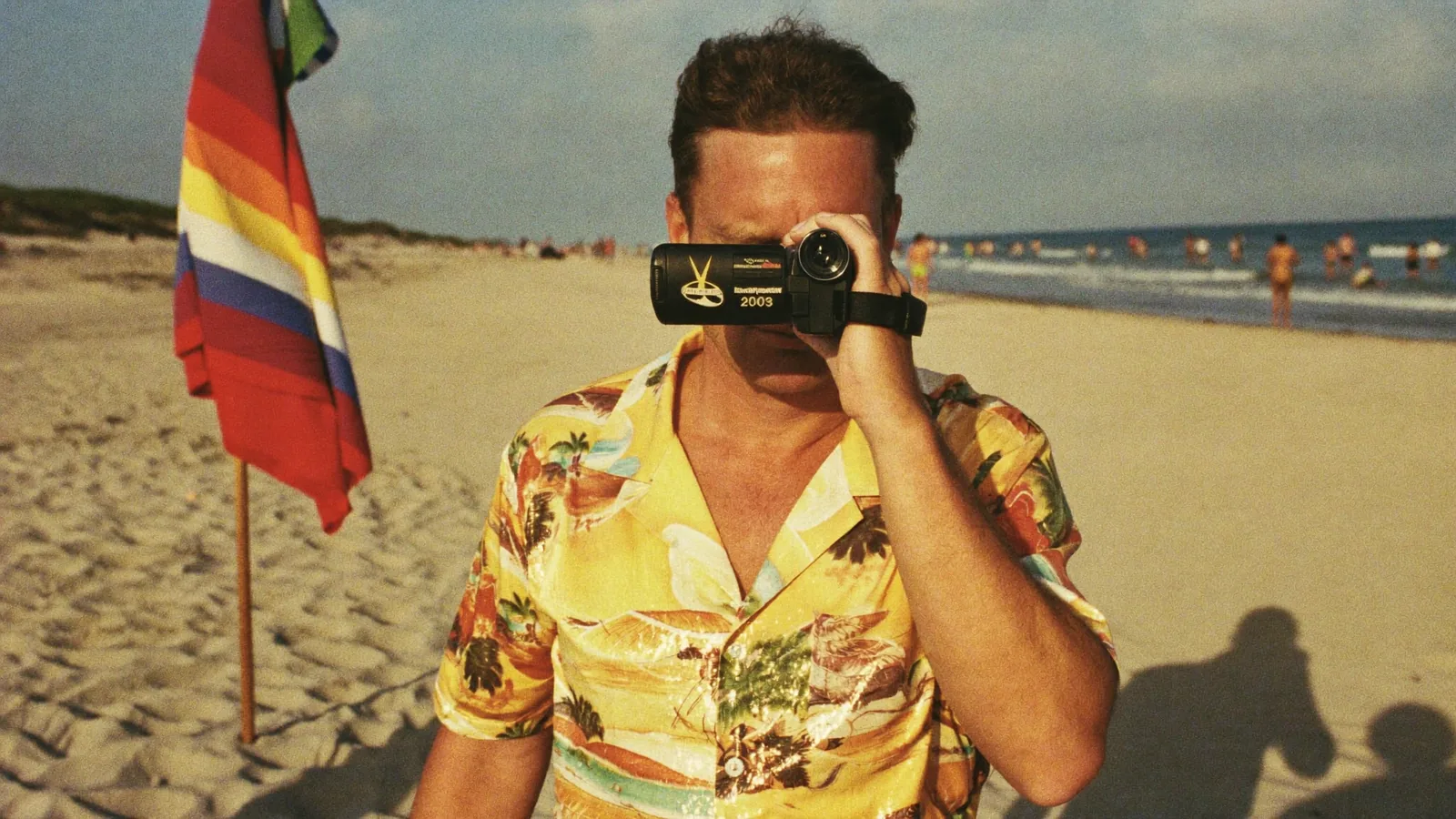
Made in Realism Pro: IMAGE PROMPT with “a dad in a Hawaiian shirt” on “a beach”, decade detail “a striped windbreak and a camcorder”.
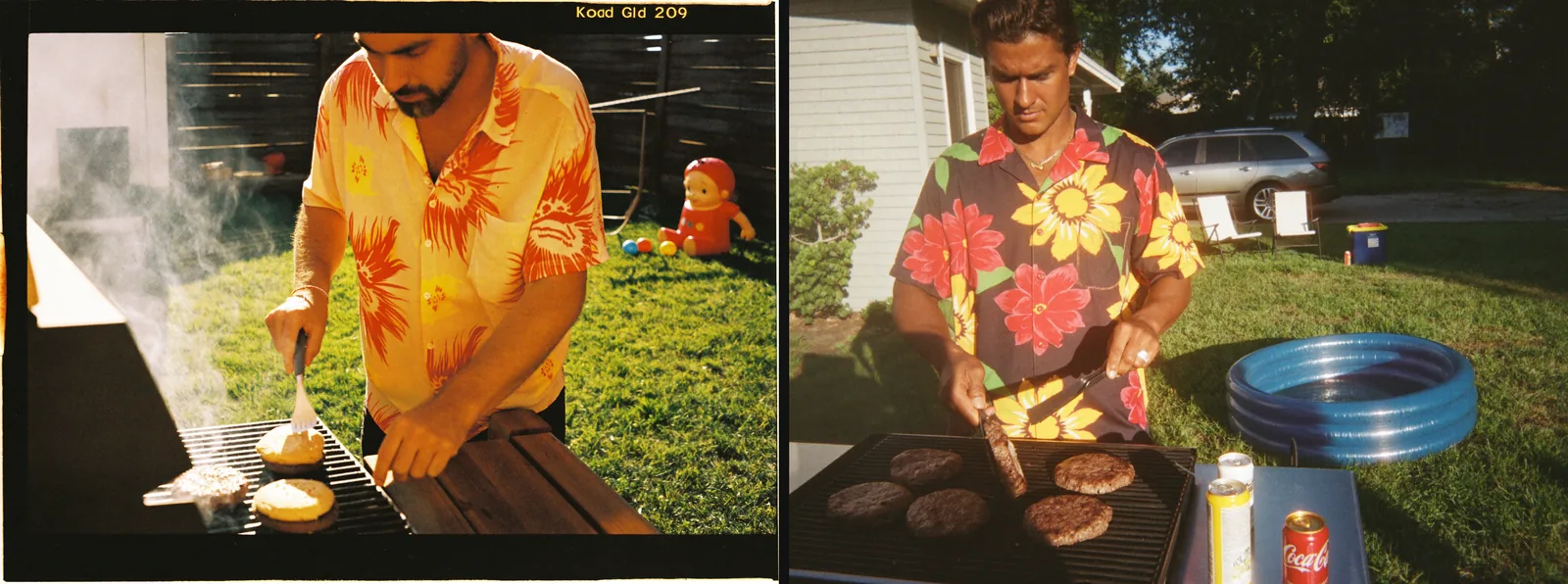
Made in Realism Pro: IMAGE PROMPT twice, second adds “an inflatable paddling pool and a station wagon in the driveway”.
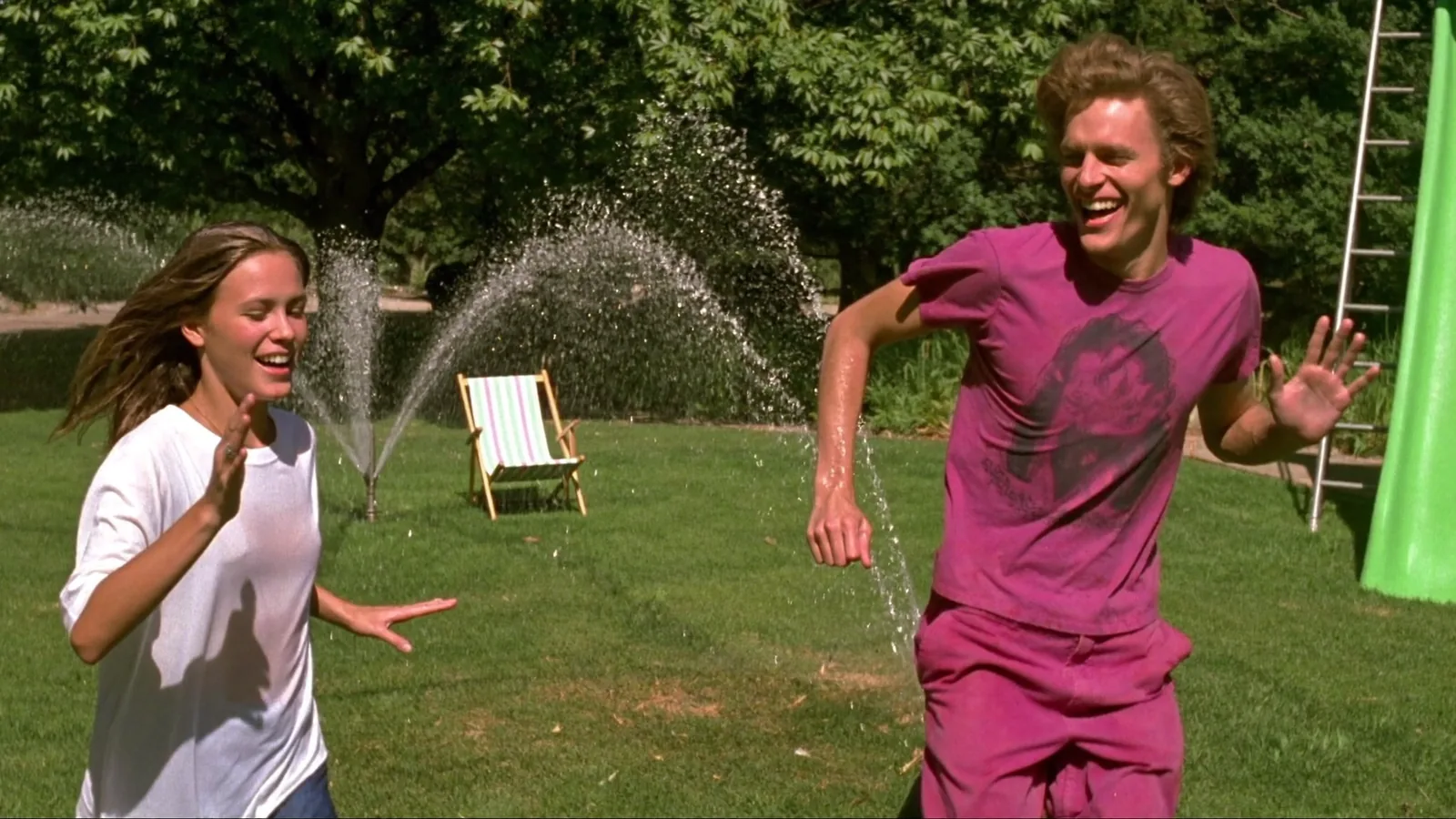
Made in Realism Pro as a still: VIDEO PROMPT with the bracket examples kept: 1990s backyard with a lawn sprinkler.
Kodak Portra 400: warm skin and soft pastels
Ask a wedding photographer what they shoot and a lot of them will say Portra. Skin looks good on it, colours stay gentle, contrast stays low. For an airier look, add “slightly overexposed, bright and airy” to the film line, imitating the extra light wedding photographers give it on purpose. That same softness makes a big landscape look washed out (use Velvia), and it’s no good for neon at night.
Kodak Portra 400 Film Line:
Shot on Kodak Portra 400, 35mm film: warm, natural, flattering skin tones, soft pastel colors, low contrast, creamy highlights and fine grain.Image Prompt
Photorealistic [medium close-up] portrait of [your subject, e.g. a bride in her thirties] [what they are doing, e.g. laughing] at [the place, e.g. a garden wedding] in the late afternoon. Soft warm sun from behind puts a gentle glowing rim light on the hair, and the face sits in soft open shade. 85mm lens at f/2, the background softly out of focus. Shot on Kodak Portra 400, 35mm film: warm, natural, flattering skin tones, soft pastel colors, low contrast, creamy highlights and fine grain. Real unretouched skin with visible texture, natural hands, no readable text or logos.Video Prompt
SET: [the place, e.g. a garden wedding at an old stone house] in the late afternoon, with [details, e.g. an arch of pale roses and guests in pastels]. No readable text or logos.
LIGHT: soft warm sun from behind, a gentle glowing rim light on hair and shoulders, the faces in soft open shade.
FILM: the look of Kodak Portra 400 35mm film, 24 frames per second: warm, natural, flattering skin tones, soft pastel colors, low contrast, creamy highlights and fine grain.
SHOT: one continuous 5-second MEDIUM SHOT, 50mm lens, [one camera move, e.g. a slow orbit around them]: [your subject] [one action, e.g. turns toward the camera and laughs].
SOUND: [the sounds, e.g. a soft breeze and guests chatting]. No music.
LOOK: real Kodak Portra 400 35mm film texture throughout. Natural movement, real unretouched skin, hands with five fingers. No text, subtitles, logos or readable signs anywhere. No slow motion.
Why this works
- Her face is in open shade with the sun behind her, which is about as gentle as light gets. Portra was made for exactly that.
- 85 mm at f/2 is close to what a lot of wedding photographers carry, so the blurred garden behind her looks familiar.
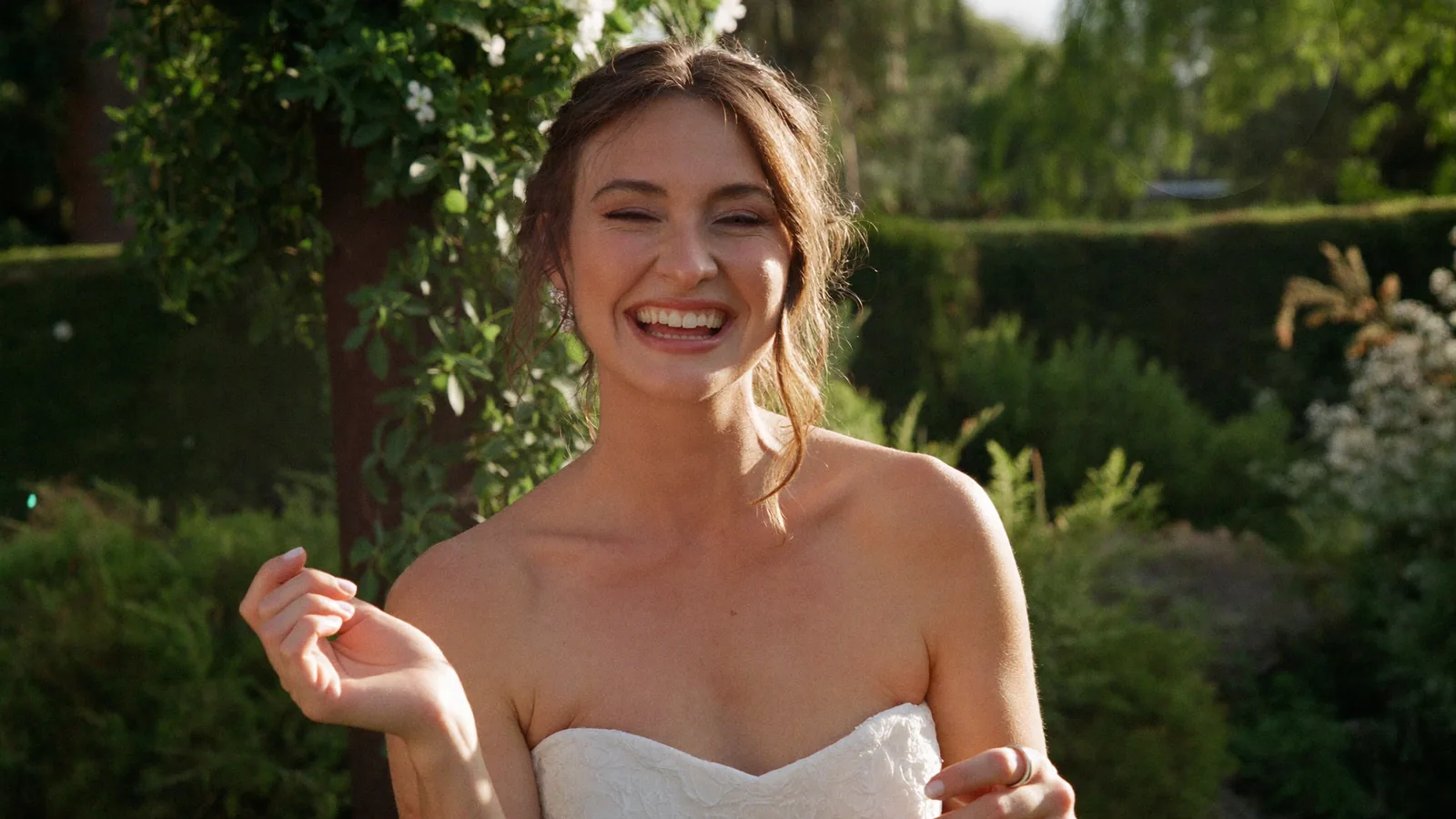
Made in Realism Pro: IMAGE PROMPT with the bracket examples kept: a bride in her thirties, laughing, garden wedding.
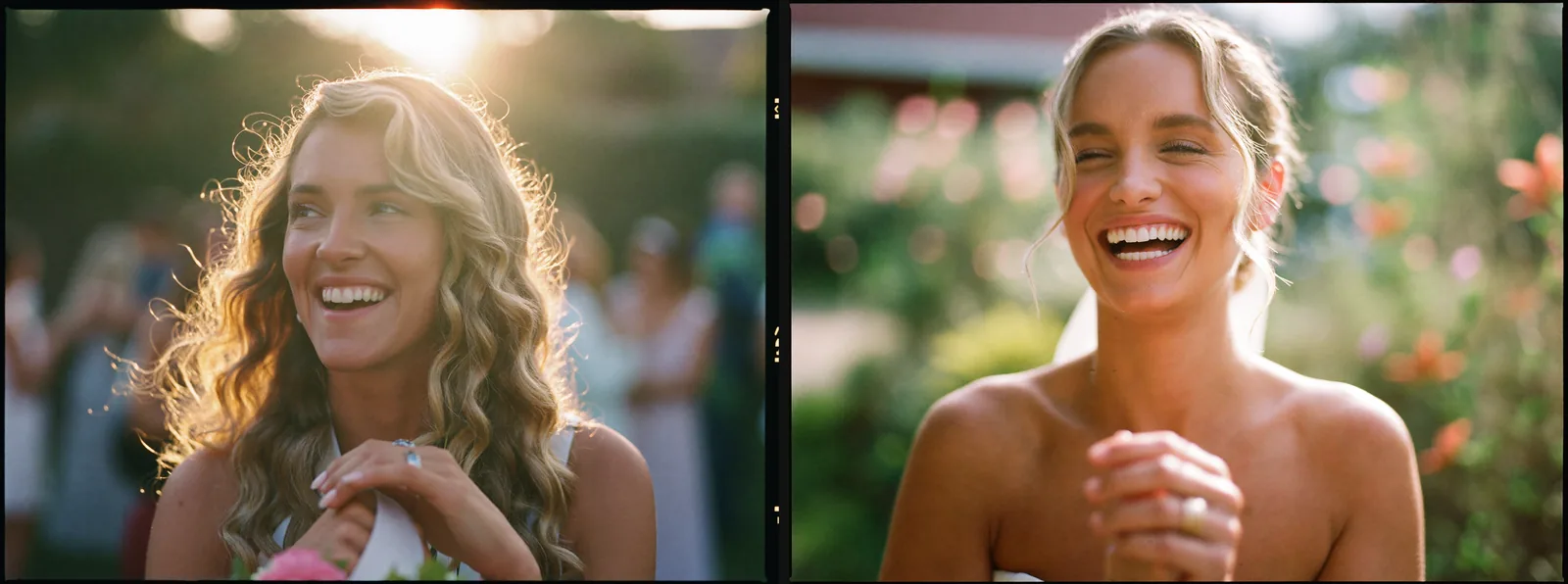
Made in Realism Pro: IMAGE PROMPT twice, second adds the airy phrase to the film line.
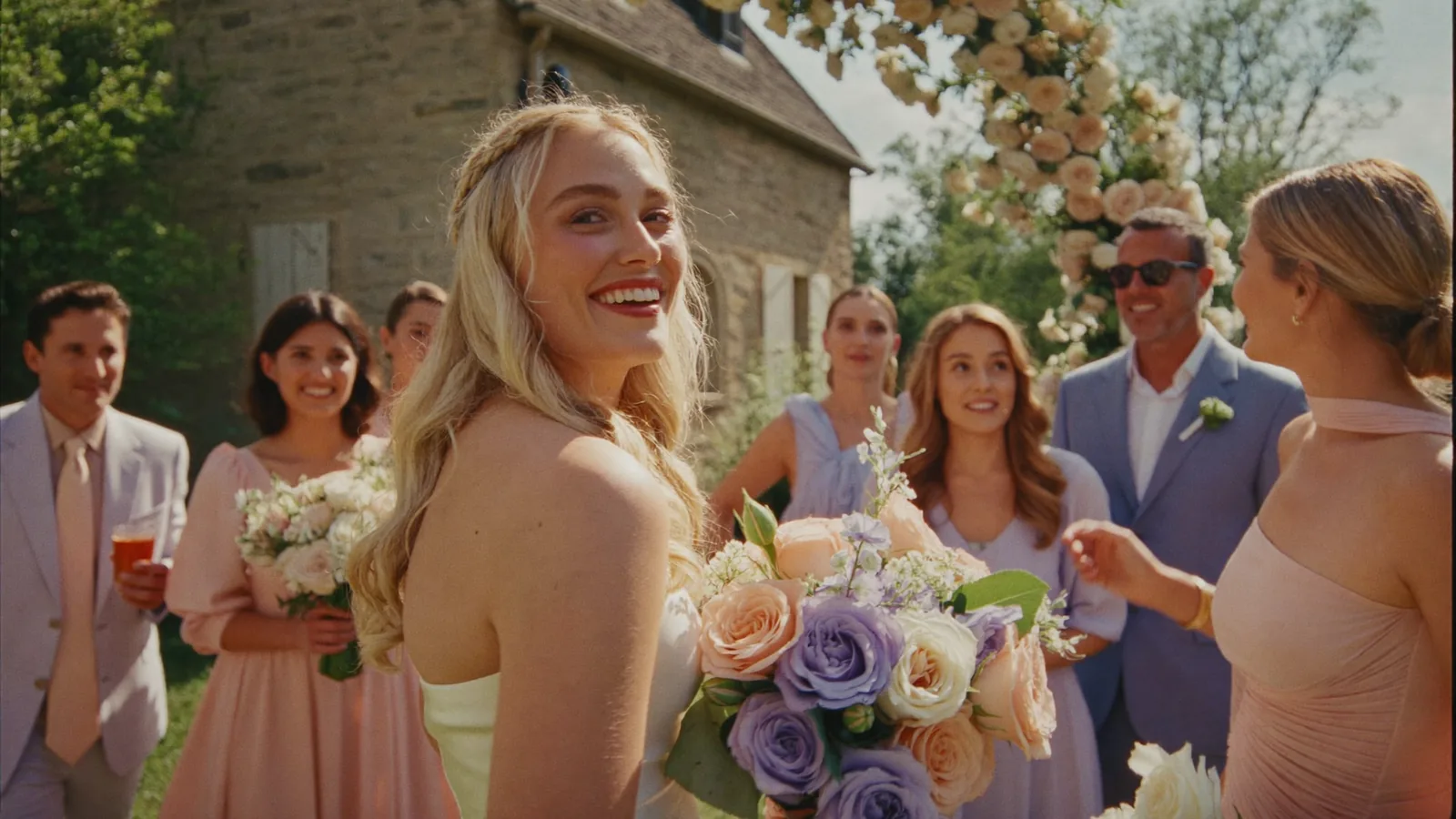
Made in Realism Pro as a still: VIDEO PROMPT with the bracket examples kept: garden wedding at an old stone house, arch of pale roses.
Fujifilm Velvia 50: colours turned right up
Velvia is a slow slide film loved by landscape photographers for colour that looks almost too rich. It exaggerates the colours already in front of the camera, so give it strong ones, such as a turquoise lake, red rocks or autumn leaves, and name them. It pushes skin warm, so it is a poor choice for close faces.
Fujifilm Velvia 50 Film Line:
Shot on Fujifilm Velvia 50, 35mm slide film: hugely saturated color, deep blues and greens, rich contrast and very fine grain, crisp like a postcard.Image Prompt
Photorealistic wide landscape of [the place, e.g. a glacial lake below granite peaks] in [the time, e.g. clear early morning], with [a small figure, e.g. a hiker in a red jacket on a rock]. Low sun from [the left or right], crisp clear air and a deep blue sky with a few white clouds. 24mm lens at f/11, sharp from front to back. Shot on Fujifilm Velvia 50, 35mm slide film: hugely saturated color, [the key colors, e.g. turquoise water and a deep blue sky], rich contrast and very fine grain, crisp like a postcard. No readable text or logos.Video Prompt
SET: [the place, e.g. a rocky lookout above a turquoise lake] in [the time, e.g. clear early morning], with [the view behind, e.g. sheer granite peaks]. No readable text or logos.
LIGHT: clear low sun from [the left or right], crisp air and a deep blue sky with a few white clouds.
FILM: the look of Fujifilm Velvia 50 35mm slide film, 24 frames per second: hugely saturated color, [the key colors, e.g. turquoise water and a deep blue sky], rich contrast and very fine grain, crisp like a postcard.
SHOT: one continuous 5-second shot, 24mm lens. It starts as a MEDIUM SHOT behind [your subject] at head height, then the camera cranes up and pulls back in one smooth move to a high wide view of the whole landscape. [Your subject] [one action, e.g. steps onto a rock and throws both arms up].
SOUND: [the sounds, e.g. strong mountain wind and boots on gravel]. No music.
LOOK: real Fujifilm Velvia 50 slide film texture throughout. Natural movement, real unretouched skin, hands with five fingers. No text, subtitles, logos or readable signs anywhere. No slow motion.
Why this works
- Low sun from the side plus a hard blue sky gives Velvia the strong colours it needs. On a grey day it has very little to work with.
- A wide lens stopped down to f/11 keeps the rocks at your feet and the far peaks sharp at once, like a postcard.
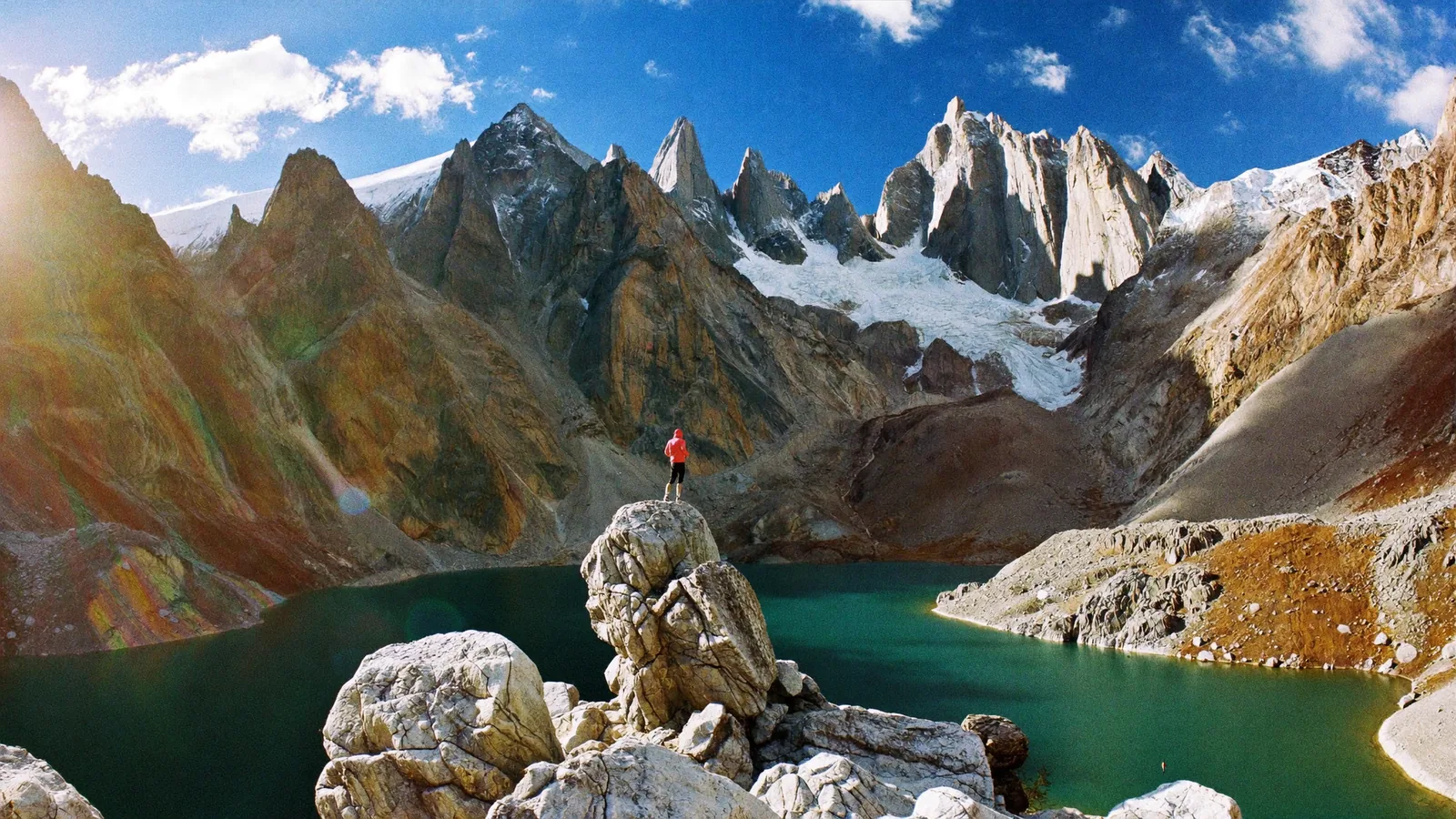
Made in Realism Pro: IMAGE PROMPT with the bracket examples kept.
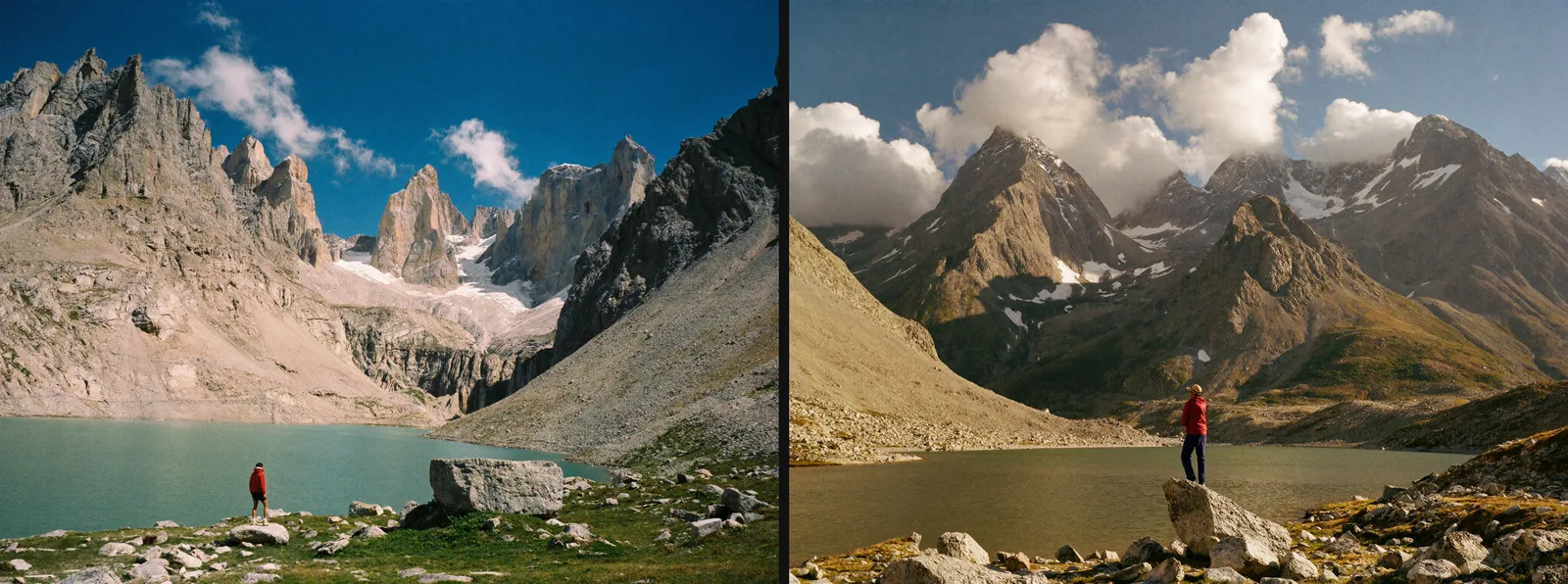
Made in Realism Pro: IMAGE PROMPT twice, second swaps in the KODAK PORTRA 400 FILM LINE.
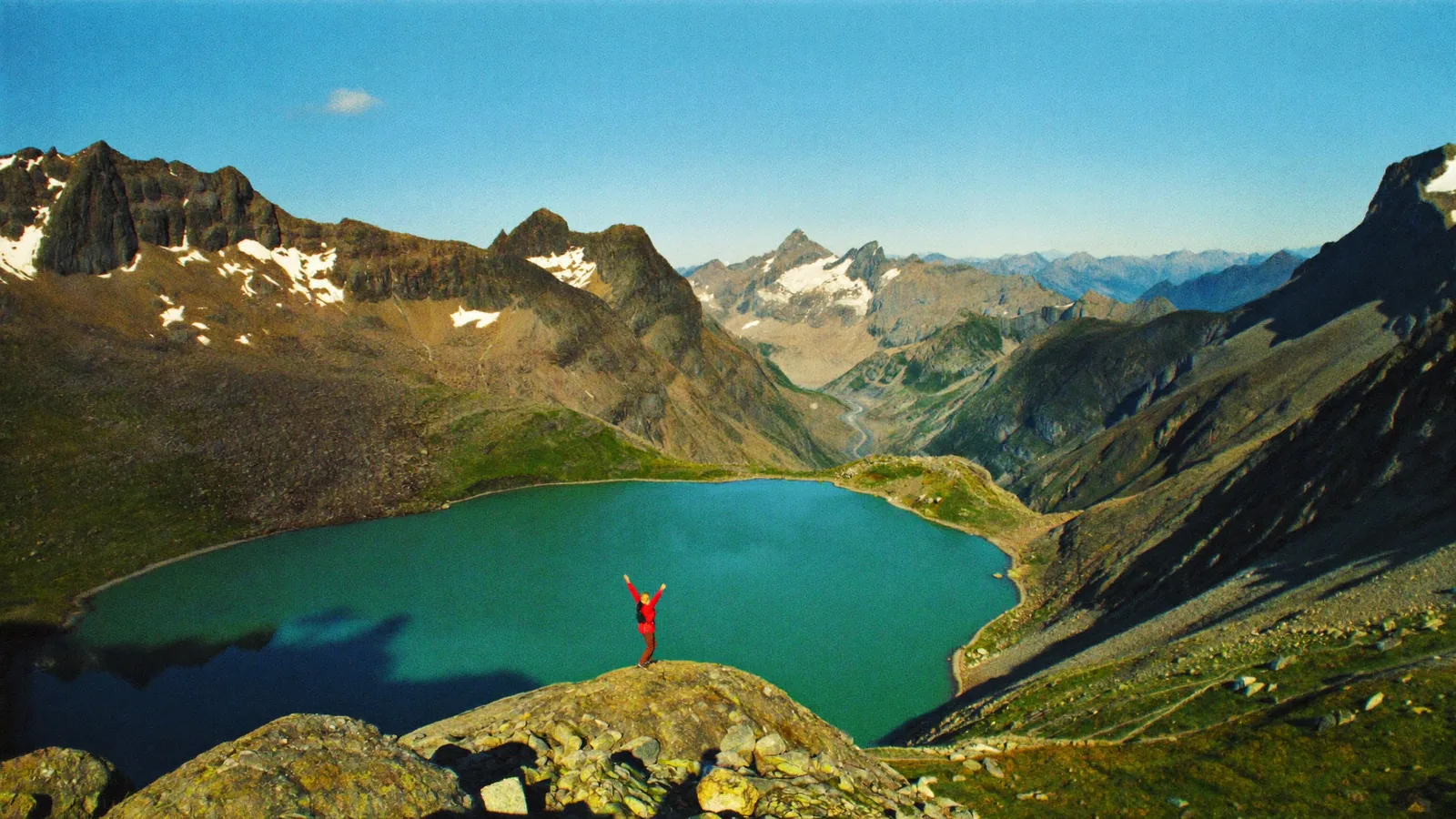
Made in Realism Pro as a still: VIDEO PROMPT with the bracket examples kept: rocky lookout above a turquoise lake.
Ilford HP5 Plus: gritty black and white
HP5 is a classic black-and-white film, and pushed to 1600 it gives deep blacks, bright highlights and heavy grain. Leave out “pushed to 1600” for finer grain, or write 3200 for more grit, treating the number as a hint. Models can drift into sepia or blue, or slip back into colour mid-video, so the prompts say black and white in more than one place.
Ilford Hp5 Plus Film Line:
Shot on Ilford HP5 Plus, 35mm black-and-white film pushed to 1600: black and white only, no color at all, deep blacks, bright highlights and strong, gritty grain.Image Prompt
Black-and-white photograph of [your subject, e.g. a detective in a loosened tie] [what they are doing] in [the place, e.g. a 1950s office at night]. One hard light, [the source, e.g. a street lamp through venetian blinds], throws [the pattern, e.g. stripes of light] across the room, and everything else falls into deep shadow. 40mm lens. Shot on Ilford HP5 Plus, 35mm black-and-white film pushed to 1600: black and white only, no color at all, deep blacks, bright highlights and strong, gritty grain. Real unretouched skin, natural hands, no readable text or logos.Video Prompt
SET: [the place, e.g. a 1950s detective office at night], with [details, e.g. a desk lamp, a rotary phone, a ceiling fan]. No readable text, lettering or logos.
LIGHT: one hard light, [the source, e.g. a street lamp through venetian blinds], throwing [the pattern, e.g. stripes] across the room, with deep shadows everywhere else.
FILM: the look of Ilford HP5 Plus 35mm black-and-white film pushed to 1600, 24 frames per second: black and white only, no color at all, deep blacks, bright highlights and strong, gritty grain.
SHOT: one continuous 5-second MEDIUM-WIDE SHOT, 40mm lens, [one camera move, e.g. a slow handheld push-in]: [your subject] [one action, e.g. answers the ringing phone]. Black and white.
SOUND: [the sounds, e.g. a ceiling fan whirring and rain outside]. No music.
LOOK: real Ilford HP5 Plus black-and-white film texture throughout, black and white only with no color and no tint. Natural movement, real unretouched skin, hands with five fingers. No text, subtitles, logos or readable signs anywhere. No slow motion.
Why this works
- Blinds striping a dark office is straight out of 1940s crime films, and HP5’s heavy contrast makes the stripes bite.
- Saying “black and white only, no color” twice looks clumsy, but models really do sneak colour back in, especially in video.
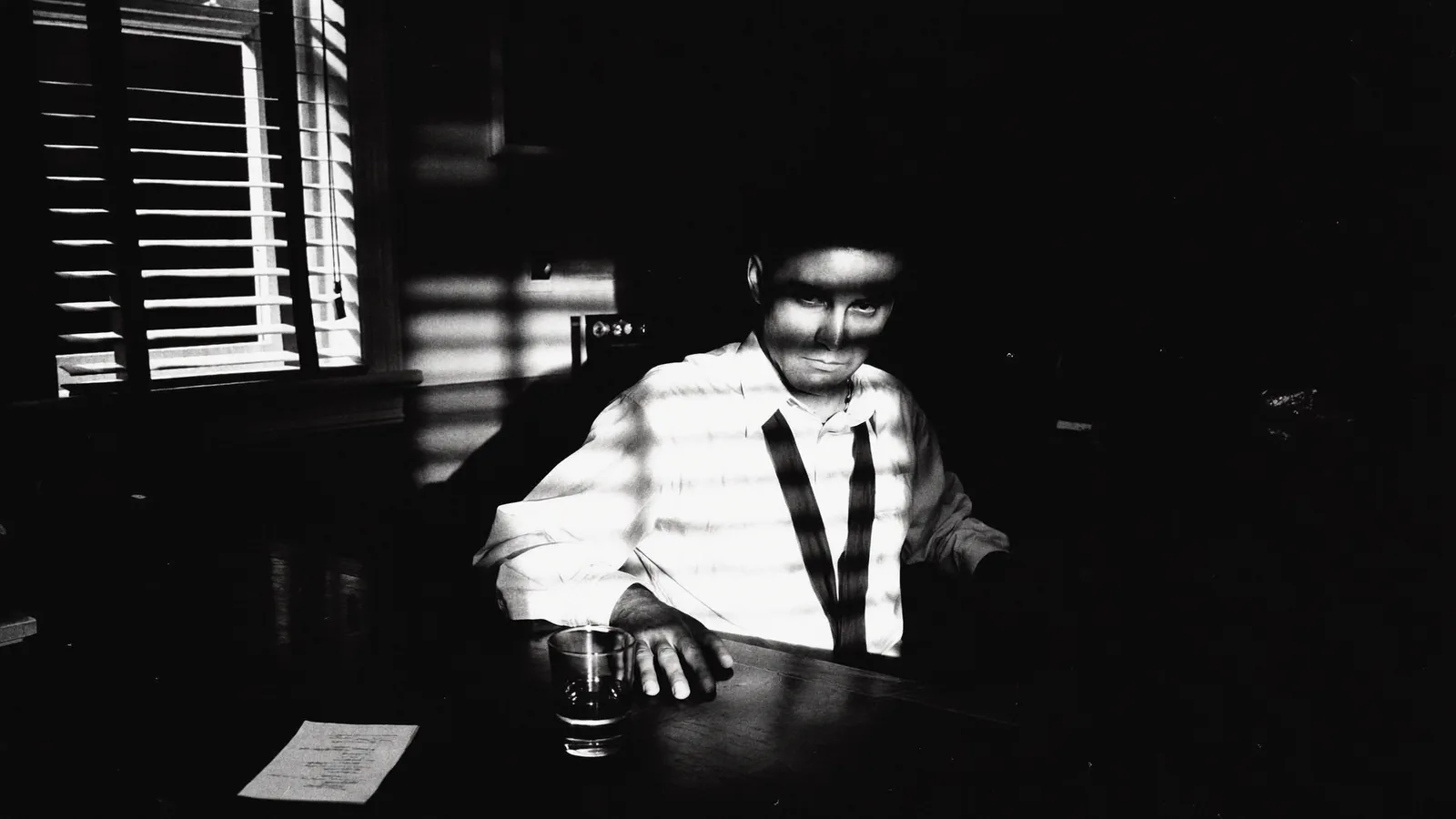
Made in Realism Pro: IMAGE PROMPT with the bracket examples kept.
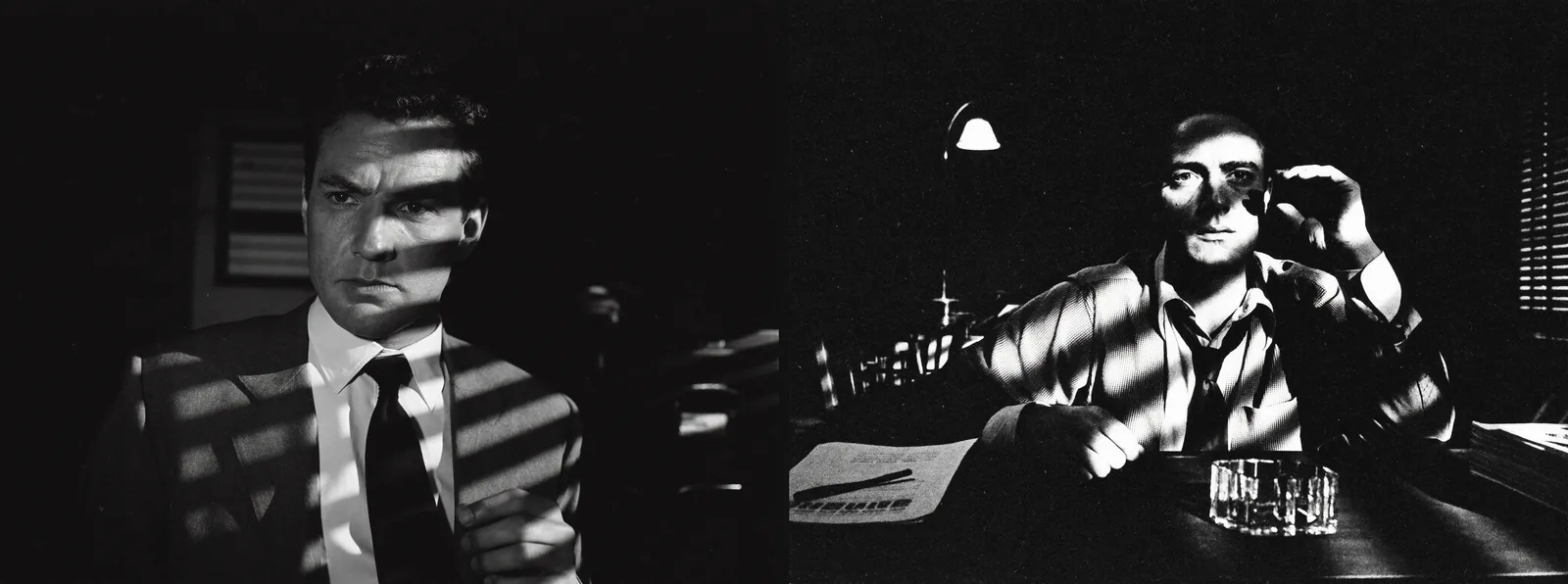
Made in Realism Pro: IMAGE PROMPT twice, film line edited to remove the push, then to “pushed to 3200”.
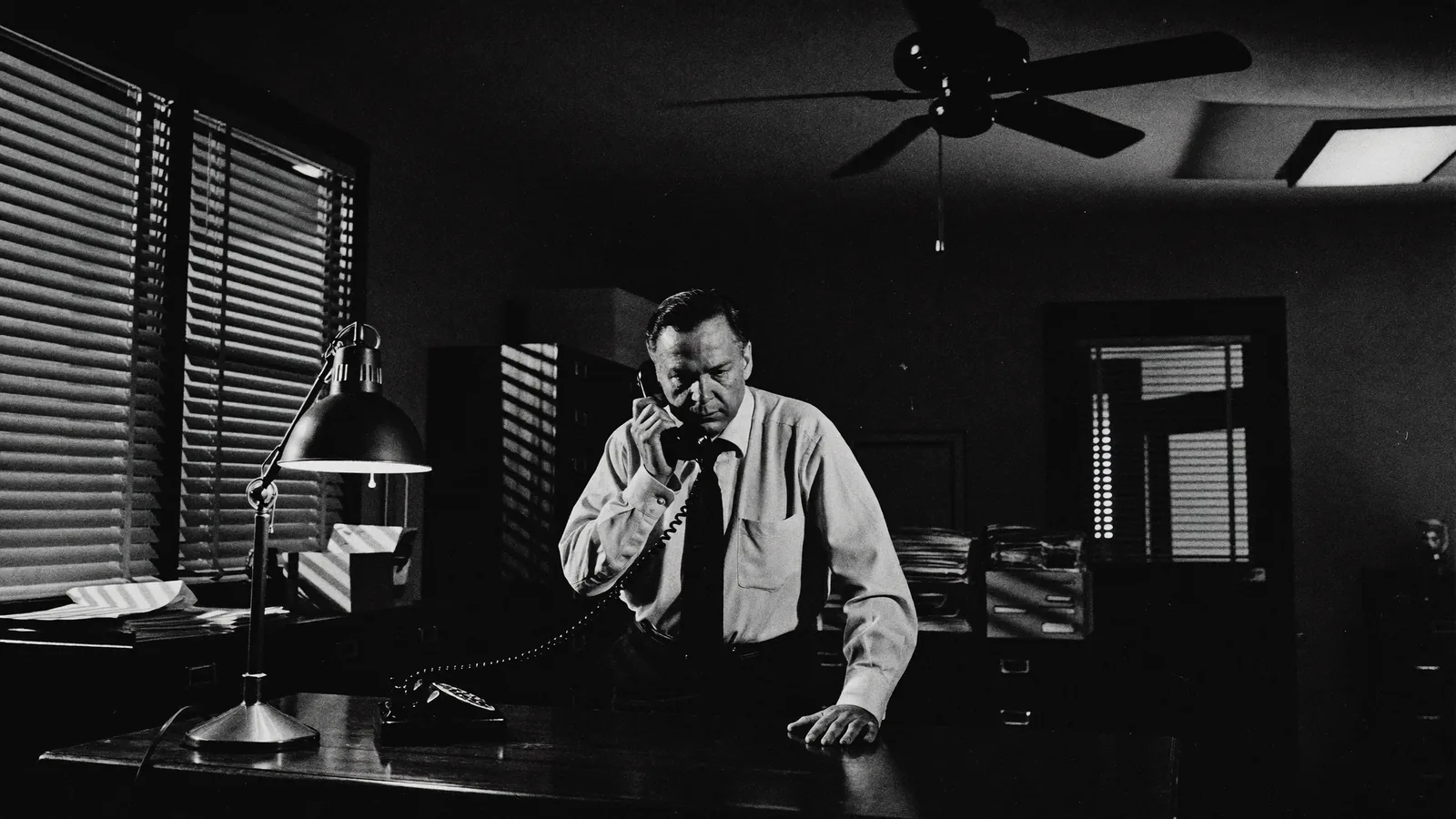
Made in Realism Pro as a still: VIDEO PROMPT with the bracket examples kept: 1950s detective office, desk lamp, rotary phone, ceiling fan.
CineStill 800T: neon nights and a red glow
CineStill 800T is cinema film adapted for still cameras and balanced for tungsten lamps, so night scenes under lamps and neon look natural with teal shadows. Its signature red glow, halation, appears around bright lights because the film lacks the backing layer that normally absorbs that light. In daylight it turns everything blue, and a model can overdo the glow into a red haze, so ask for it around the brightest lights only.
Cinestill 800T Film Line:
Shot on CineStill 800T, 35mm film: tungsten-balanced, cool teal shadows, a soft red halation glow around the brightest lights only, visible grain.Image Prompt
Photorealistic [medium-wide shot] of [your subject, e.g. a woman in a black vinyl jacket] [what they are doing, e.g. walking toward the camera] down [the place, e.g. a narrow city alley of tiny bars] at midnight, on a wet street. Bare neon tubes in [colors, e.g. red, pink and blue] bent into simple loops and lines are the only light, with [one more light, e.g. a glowing vending machine]. 35mm lens at f/1.4, shallow depth of field with glowing bokeh. Shot on CineStill 800T, 35mm film: tungsten-balanced, cool teal shadows, a soft red halation glow around every neon tube and bright light, visible grain. Real unretouched skin, natural hands, no readable signs, letters or logos anywhere.Video Prompt
SET: [the place, e.g. a narrow city alley of tiny bars] at midnight: a wet dark street, [details, e.g. a steaming noodle counter] and bare neon tubes in [colors, e.g. red, pink and blue] bent into simple loops and lines. No signboards, letters or symbols anywhere.
LIGHT: the neon tubes and [one more light, e.g. a glowing vending machine] are the only light, with cool night air between them.
FILM: shot on a 35mm film camera loaded with CineStill 800T, 24 frames per second: tungsten-balanced, cool teal shadows, a soft red halation glow around every neon tube and bright light, visible grain.
SHOT: one continuous 5-second MEDIUM-WIDE SHOT, 35mm lens at f/1.4 with glowing bokeh, a smooth tracking shot backwards in front of [your subject] at walking pace: [your subject] [one action, e.g. walks toward the camera, deadpan].
SOUND: [the sounds, e.g. wet footsteps and a distant train]. No music.
LOOK: real CineStill 800T 35mm film texture throughout, with the red glow staying around the lights. Natural movement, real unretouched skin, hands with five fingers. No text, subtitles, logos or readable signs anywhere. No slow motion.
Why this works
- Ask for a neon sign and you will usually get gibberish letters. Bent tubes with no words dodge that.
- Rain on the ground means every light shows up twice, once above and once in the puddle, and both get the red glow.
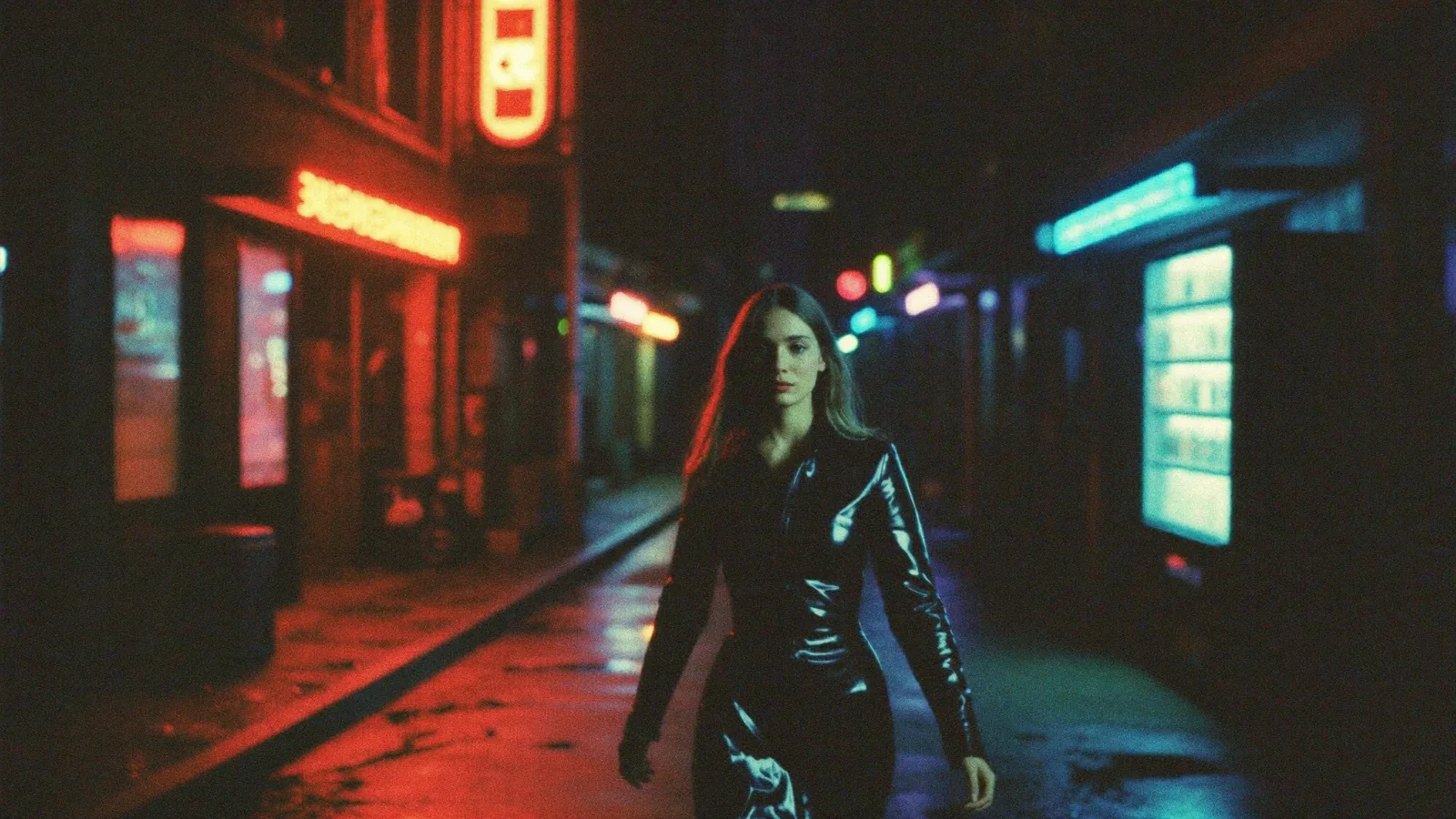
Made in Realism Pro: IMAGE PROMPT with the bracket examples kept.
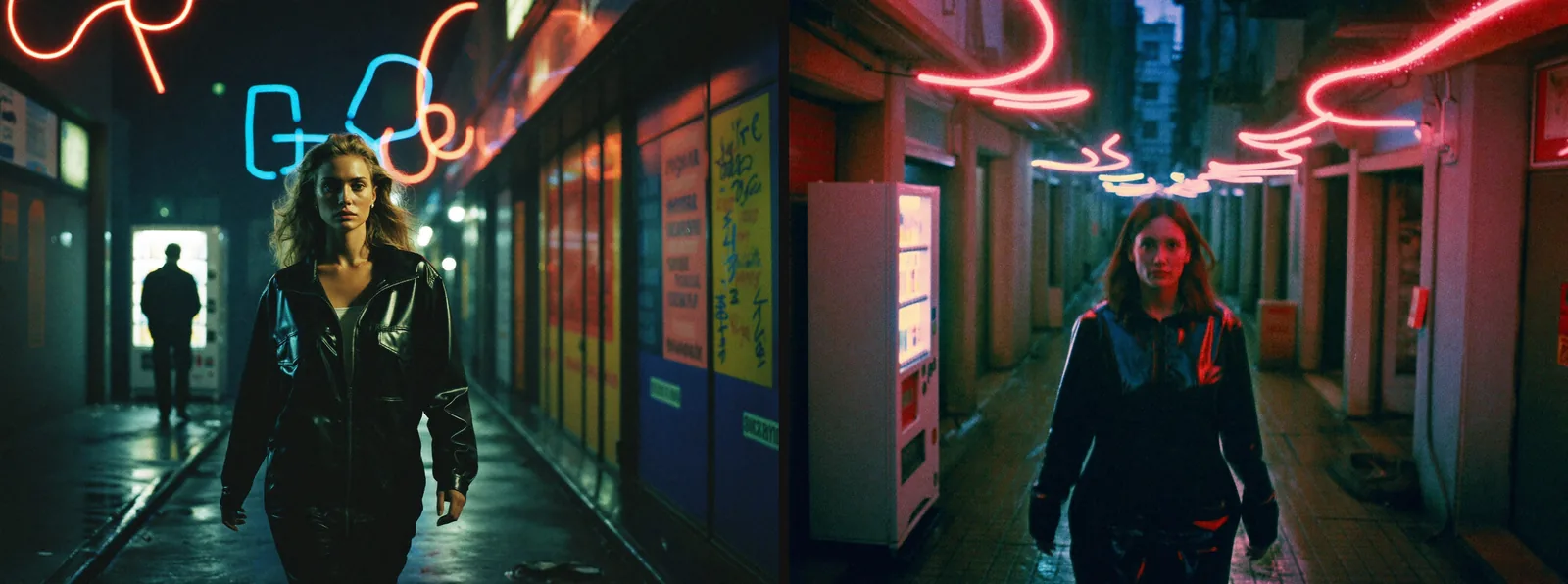
Made in Realism Pro: IMAGE PROMPT twice, second replaces the film line’s glow phrase with “strong red halation”.
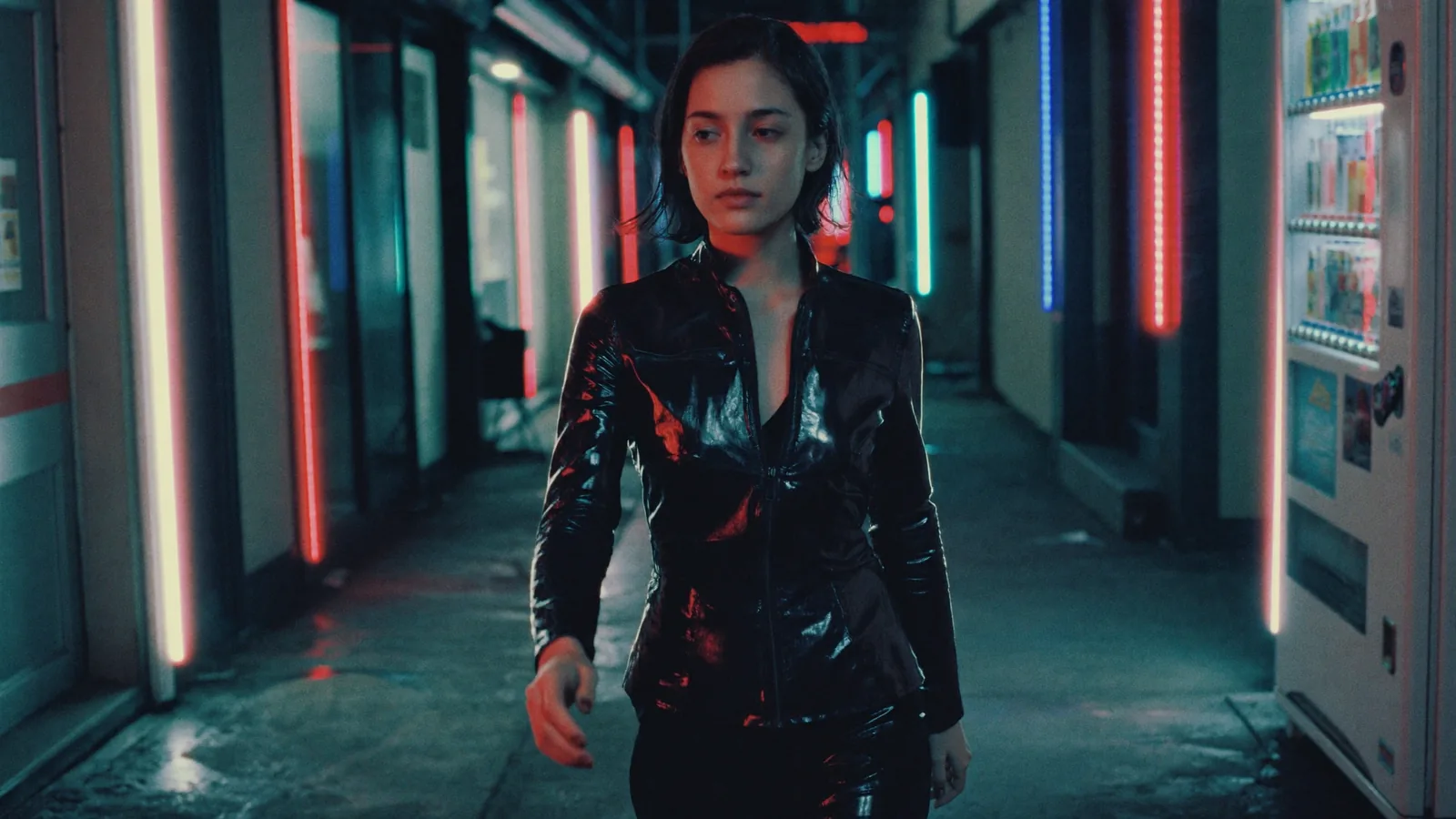
Made in Realism Pro as a still: VIDEO PROMPT with the bracket examples kept: narrow city alley, steaming noodle counter, glowing vending machine.
Mix the film with a lens and a light
A film line only handles colour and grain. A real photographer also chooses a lens and hangs around for the right light, so the template asks for all three. Get the light wrong for the film, say a daylight stock under orange street lamps or CineStill at noon, and it usually comes out muddy. Note that “35mm film” is the film size, while a “35mm lens” is a focal length; both can sit in one prompt.
Image Prompt Template:
Photorealistic [shot size, e.g. medium shot] of [your subject] [doing what] in [the place, at what time of day]. [The light: its source, direction and color]. [24 / 35 / 50 / 85]mm lens at [f/1.4 / f/2 / f/8 / f/11], [what stays in focus]. Shot on [the film stock], 35mm film: [the look words from the cheat sheet]. Real unretouched skin, natural hands, no readable text or logos.Why this works
- Shot, subject, light, lens and film each get their own slot. Swap the film and nothing else moves.
- Paste the same film line into every shot of a scene; a shot without it drifts back towards clean digital and the cut jumps.

Made in Realism Pro: IMAGE PROMPT TEMPLATE filled with “medium shot of a cyclist waiting at a city crossing at dusk, street lamps coming on, 35mm lens at f/2”; film line swapped per panel.
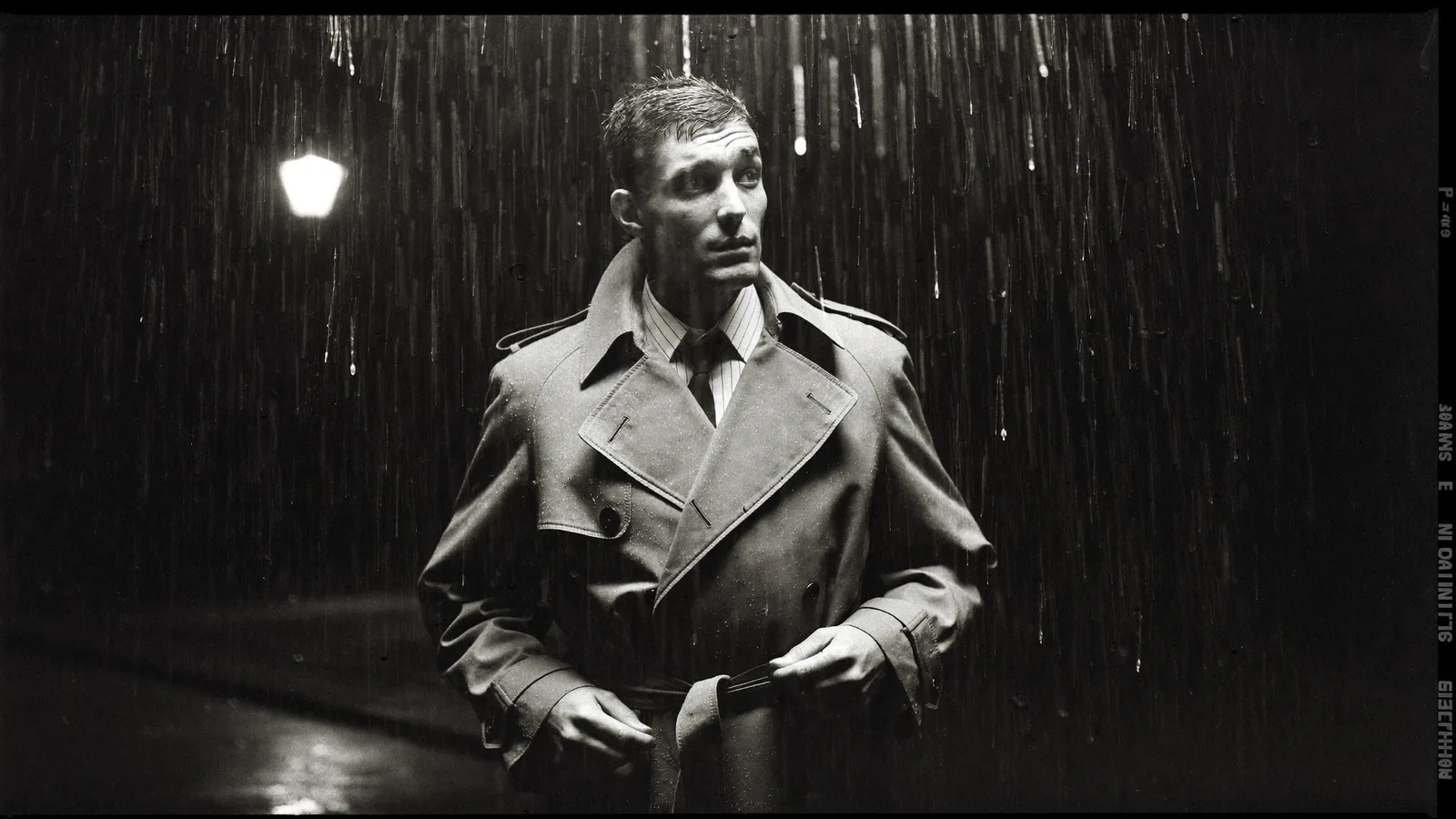
Made in Realism Pro: IMAGE PROMPT TEMPLATE filled with “a man in a trench coat under a single street lamp in the rain”, 50mm at f/2, Ilford HP5 Plus.
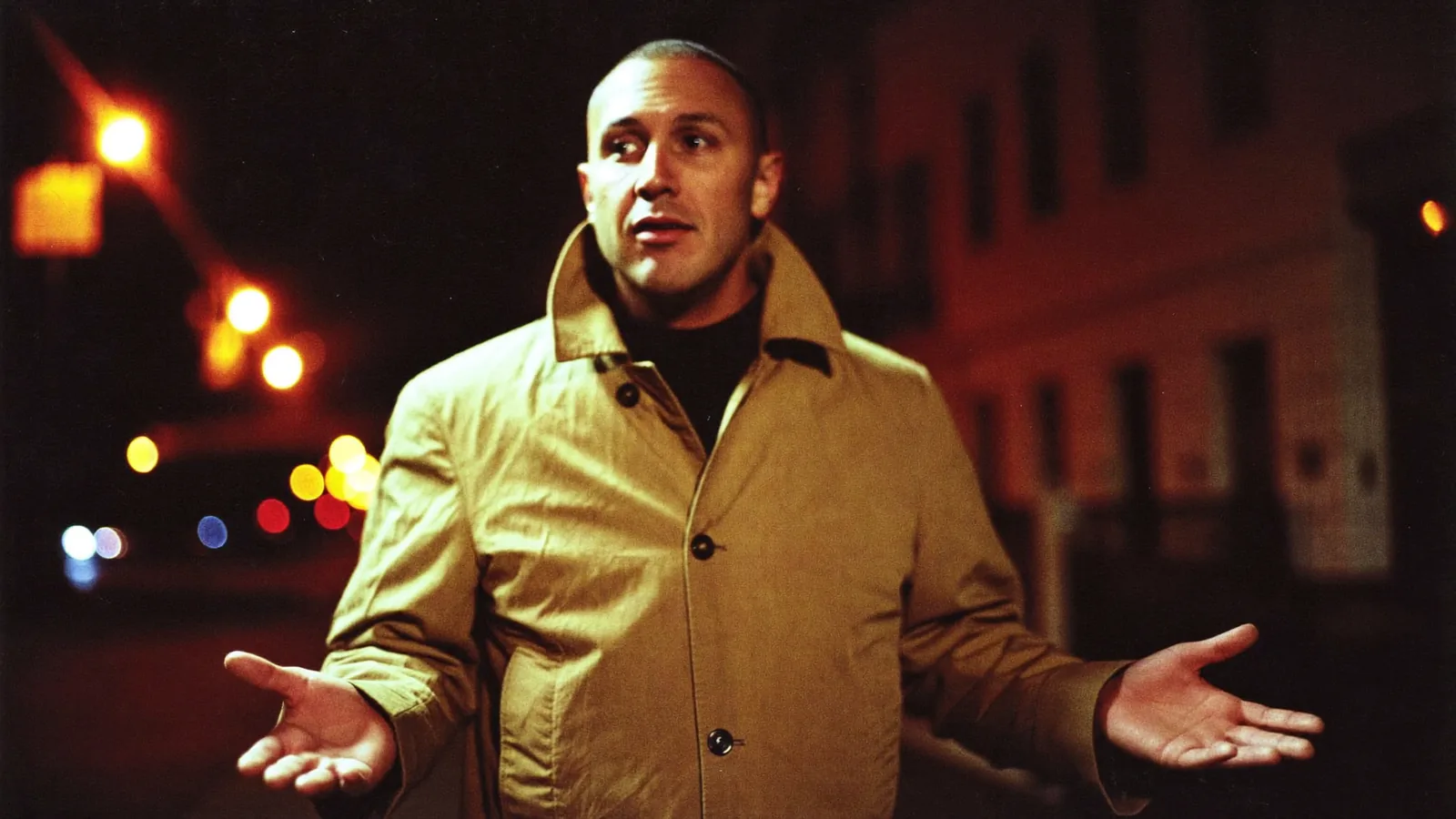
Made in Realism Pro: IMAGE PROMPT TEMPLATE, same street scene at night, Kodak Gold 200 film line.
Make your own in PromptWise
Choose a stock by the light in your scene, paste its film line into the template and generate on Realism Pro. When the colour and grain look right, start a Seedance 2.5 clip from the still with the same film line so the look survives the motion. Every model is available as soon as you sign up, among 40+ image, video and audio models in the studio.
Related
FAQ
Why does an AI video still look digital after naming a film stock?
Check that the prompt also says "35mm film" and includes a grain phrase such as "fine visible grain", and remove 4k, 8k, ultra detailed and hyper sharp, which pull towards a clean digital look.
What does 35mm film mean in a prompt?
It is the size of the film, the most common size for still cameras and the standard for cinema. It tells the model the picture is a real film photograph. It is unrelated to a 35mm lens, which is a focal length.
What stops a black-and-white prompt coming out sepia?
Write "black and white only, no color, no sepia, no tint" in the film line and repeat it at the end of the prompt. In video, say black and white in the film line, the shot and the look line.
Sources
We checked these official pages on the dates shown. Prices and specs can change, so check the provider's page before you buy.
- Kodak: Gold 200 film (Checked 27 Oct 2026)
- Kodak Professional: Portra 400 film (Checked 27 Oct 2026)
- Fujifilm: Velvia 50 (Checked 27 Oct 2026)
- Ilford: HP5 Plus 35mm (Checked 27 Oct 2026)
- CineStill: 800Tungsten 35mm film (Checked 27 Oct 2026)